


Annonse
Floods in Nepal: –We have been calling for environmental justice
Nepal still faces the consequences of the August Bhote Koshi flood and needs to prepare for long-term restoration. The catastrophe, however, does not remain within the Nepali borders.

Publisert
Sist oppdatert
Annonse
Even though three months have already passed, the rescue operations and search for the bodies of the victims are still ongoing.

Bipana Shrestha, who is currently working for Volunteering Initiative Nepal, describes a situation where everyone is trying to help, because thousands of people are still missing.
Kaushal Subedi, who works for the same association, belives many of the victims bodies will go unfound, and stresses the psychological influence the flood has.
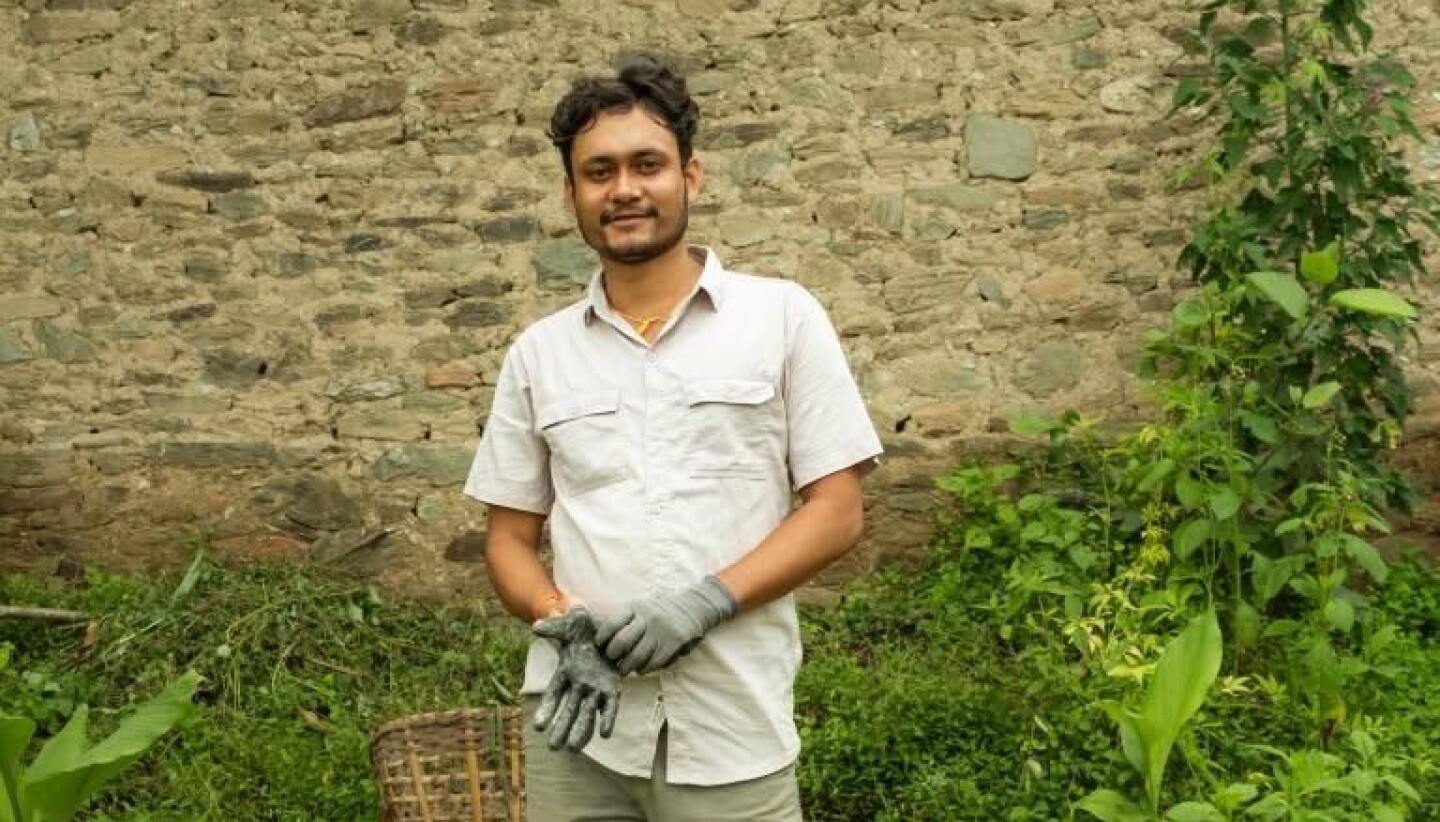
– It is a big psychological trauma, so many lives have been lost.
Both also stress the long-term consequences.
Annonse
– Many communities are facing difficulties with basic needs such as food and transportation. Many hydropower stations and roads were destroyed, Shrestha says.
“Invisible” processes
Such damage is nothing new for Nepal, as it is very sensitive to environmental influences. As the Prime Minister of Nepal, Birendra Shah, stressed in his speech at the UN:
– Every major disaster threatens to erase years of development. The recovery needs about 10 percent of GDP.

Professor Inger Måren, UNESCO Chair on Sustainable Heritage and Environmental Management, is currently working on a project to strengthen mountain resilience and to establish UNESCO biosphere in the Kangchenjunga region in eastern Nepal. She points out that it is difficult to directly say what caused the flood.
– The media is questioning whether it was really caused by climate change, as it is very difficult to pin one single event to a global phenomenon. There is evidence, though, that the monsoon period has been warming over the past 50 years, Måren explains.

The consequences of the catastrophe influences a long-term “invisible” processes.
– There are a lot of small lakes with moraine filled with ice. One day they melt and burst out, which also influences the biosystems, explains Professor Ole Vetaas from the University of Bergen, who has long-term experience working on environmental projects in Nepal.
– We are outsourcing the production of what we need, but Nepal has a much more circular economy; rural areas depend on local resources, stresses Måren.
Growing anger in Nepal
Nepal’s geography and people's dependence on the state of nature make sustainable behaviour a more urgent necessity than in many countries of the Global North.
– We are a developing country; we don’t have fossil fuels, so we need wood. Because we are dependent on nature, we also need to resurrect her, comments Subedi.

Nonetheless, as respondents stress, there is growing anger in Nepal that other countries gain wealth from fossil fuels, while Nepal has to deal with the environmental consequences without having the same opportunity.
– There is, of course, increasing resentment in Nepal. They use very little fossil fuel, and developed countries got all their wealth from using fossil fuels. We provide aid in the case of a disaster, but is it actually help if we contribute to environmental change? Måren asks.
– We have been calling for environmental justice, and that the problem in general is not treated just as humanitarian action, adds Shrestha.
Climate change across borders

There are international projects aiming to help Nepal in the long term. Shrestha mentions one such organisation besides the ongoing projects in Nepal.
– Nepal is already working on reducing climate crisis risks, developing early warning systems, and cooperating, for example, with The International Centre for Integrated Mountain Development (ICIMOD).
ICIMOD is an intergovernmental centre that aims to improve the lives of people of the Himalaya.
– Monsoon warming is a problem for the whole south-Indian part of the continent. Transnational cooperation is key, because rivers, glaciers, and wildlife don't see any borders. Kangchenjunga is the third-highest peak in Nepal, but it also goes into China, Bhutan, India, and a lot of indigenous people live there. All of them share the same river systems and watersheds, Måren explains.
– Indians won't stay in India if there is no water from Nepal. We already have some climate refugees, and people are going to start moving more, she adds.
Cooperation and exchange of knowledge

Subedi stresses the importance of better preparation for anticipating disasters.
– Better alert systems and professional evacuation teams could help to get information about the catastrophe on time and help with an evacuation from the dangerous area, Subedi says.
Both Subedi and Vetaas also consider it important to know how to recover from such disasters effectively, because it is difficult to control environmental changes.
– Climate change cannot be stopped. We have to be better at handling the consequences as well, says Subedi.
They think that a significant part of being prepared also includes stronger cooperation and knowledge exchange, as Nepal does not possess good enough technology to monitor the changes.
– We could have a universal weather system. We did not know that the lakes were filling up, suggests Subedi.

– Monitoring is key, because cameras can be in the areas where we can't walk. We should spread knowledge on how to use these, adds Professor Vetaas.
Vetaas also argues that cooperation might prove useful not only on the information level, but also in the case of knowledge exchange.
– All countries have different natural conditions, and such exchange could help them tackle problems with which others might already have some experience and give people work. Nepali people know how to tackle water power, and how to use it sustainably, for example.
Compassion and global solidarity
– We are all global citizens. We need to start realising that we can all play a part and do something on a personal level, and also vote for the right politicians. We should also have a broader picture in the media and give space to these events. Otherwise, people don't really understand what is happening, argues Måren.
Vetaas also highlights the need to understand the problem’s longevity.
– We have to create awareness that this is a long-term problem. We have to be adaptive to prevent worsening for our great great-grandchildren. We can prevent some things in the millennium.
And people have already proved that they are able to ignite change.
– We proved we can do strange things and cooperate globally when we need to. For example, when the ozone layer was thin, we agreed to reduce the production of harmful gases, and the problem was solved. Don't lose hope; the future is not fixed, Måren concludes.


